
Muslim Youth Should Strengthen Their Connection with the Qur'an: Prof. Dr. Hussain Mohi-ud-Din Qadri
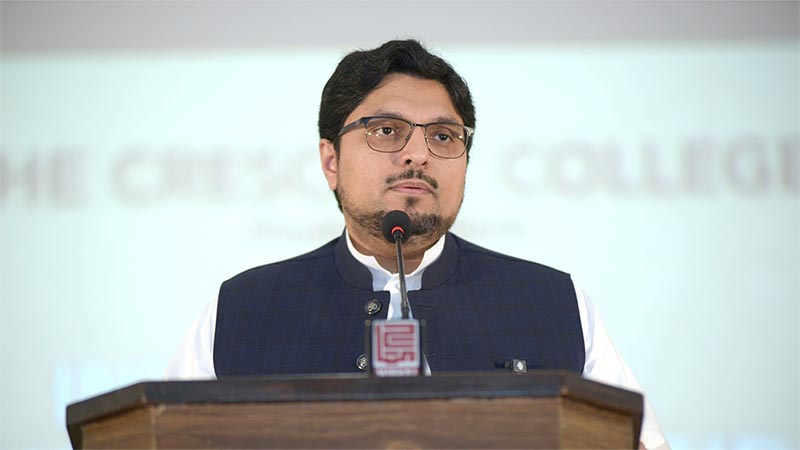
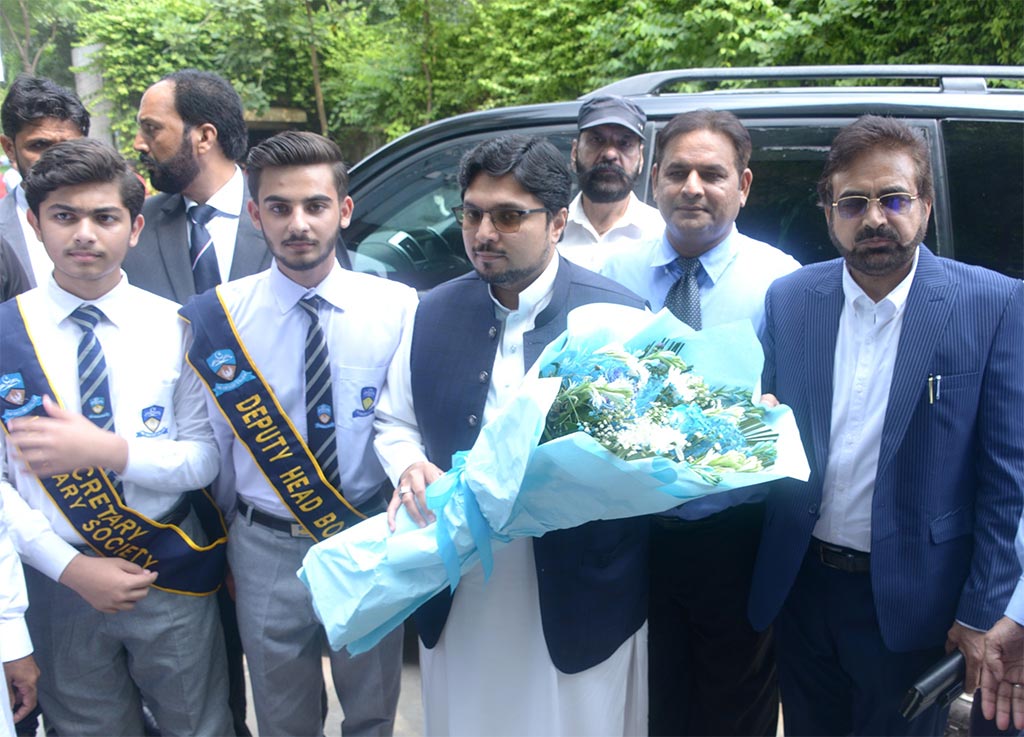
The event was graced by the chief guest, Professor Dr. Hussain Mohi-ud-Din Qadri (President of Minhaj-ul-Quran International and Deputy Chairman of the Board of Governors, Minhaj University Lahore).
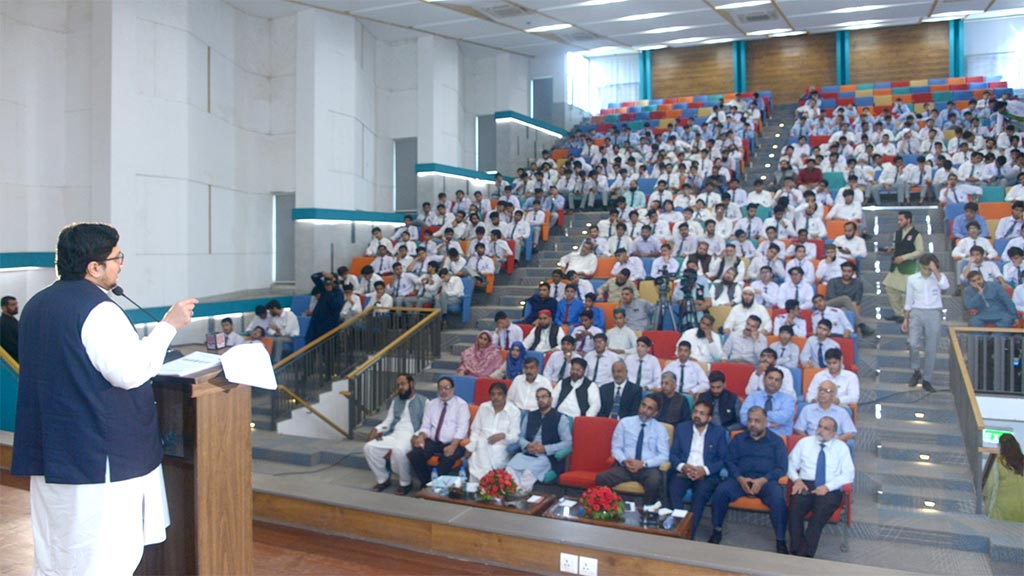
In his address, Professor Dr. Hussain Mohi-ud-Din Qadri elaborated on the need to protect faith and the intellectual and ideological challenges faced by the youth. He said that the blessed month of Rabi' al-Awwal reminds us of our connection with the Seerah of the Prophet Muhammad (PBUH) and the message of making the light of religion a part of our lives.
He said that today, the Muslim Ummah faces the dangers of secularism and materialism, ideologies that first flourished in the West and are now penetrating Muslim societies through social media. He emphasized that when negative discussions about religion surface, they ultimately lead to a denial of the existence of God. Some people accept spiritual phenomena but deny the beliefs and practices of religion, and they too are victims of this ideological fitnah (trial). The only way to counter these tendencies is through knowledge, research, and intellectual reasoning.
Dr. Hussain further stated that throughout human history, no religion has ever denied the existence of God. Even the Hindu Vedas contain a book titled "The Search for God." The fitnah of secularism is a product of the modern age and is being spread subtly. Although Islam appears to be in a state of decline today, for a long period, it showed the world new paths to progress. Islam has never been outdated; the real issue lies in the weakness and intellectual decline of its followers. The success or failure of any nation is determined not by wars, but by the strength of its intellect and vision.
Professor Dr. Hussain Mohi-ud-Din Qadri also pointed out that Muslims are adopting fabricated traditions from other cultures and applying them to Islam, which is unwise. Allah has provided Muslims with four fundamental sources of guidance: the Qur'an, the Hadith of the Prophet Muhammad (PBUH), the human soul which testifies to the teachings of the Qur'an, and human genetics, which is also acknowledged by science. Renowned scientist Dean Hamer, in his 2004 book, proposed the theory of the "God Gene," a gene within the human DNA that compels humans to search for God.
Discussing the scientific aspects of the Qur'anic miracles, he mentioned that if the sun and the moon deviated even slightly from their orbits, the solar system would be destroyed, a reality that the Qur'an mentioned centuries ago. He also pointed out that science now shows that 71% of the Earth is covered by water, and 29% is land, a ratio which matches the frequency with which the terms "earth" and "water" are mentioned in the Qur'an (13 times for "earth" and 32 times for "water"). The Qur'an compares mountains to pegs, and today science confirms that the roots of mountains are much deeper than their visible peaks. Similarly, in Surah Al-Hadid, the Qur'an mentions that iron was sent down to Earth, and scientific research has verified this. The Qur'an also states that every living being was created from water, a fact confirmed by biology, which shows that approximately 70% of a cell is composed of water.
Professor Dr. Hussain Mohi-ud-Din Qadri referred to the scientific and historical evidence regarding the drowning of Pharaoh and the preservation of his body. He mentioned that in 1898, during excavations in Egypt, a mummy was discovered and later transferred to Cairo. In 1975, after research, Dr. Maurice concluded that it was the body of Pharaoh. The question arose, who preserved it after it was retrieved from the sea? He found the answer in the Qur'an, specifically in Surah Yunus, and after reading about this event, he was so amazed that he accepted Islam.
Dr. Hussain Mohi-ud-Din Qadri urged students to strengthen their faith because no power can defeat them once their beliefs are solid. He stressed the importance of study, reflection, and maintaining a strong connection with the Qur'an and Sunnah. He concluded by saying that Islam is a religion of peace, justice, and the well-being of humanity, with no contradictions within it.
At the end of the event, he praised the college administration for this intellectual and educational initiative and expressed hope that the institution would continue to serve in nurturing the intellectual, moral, and spiritual development of students with the same zeal.
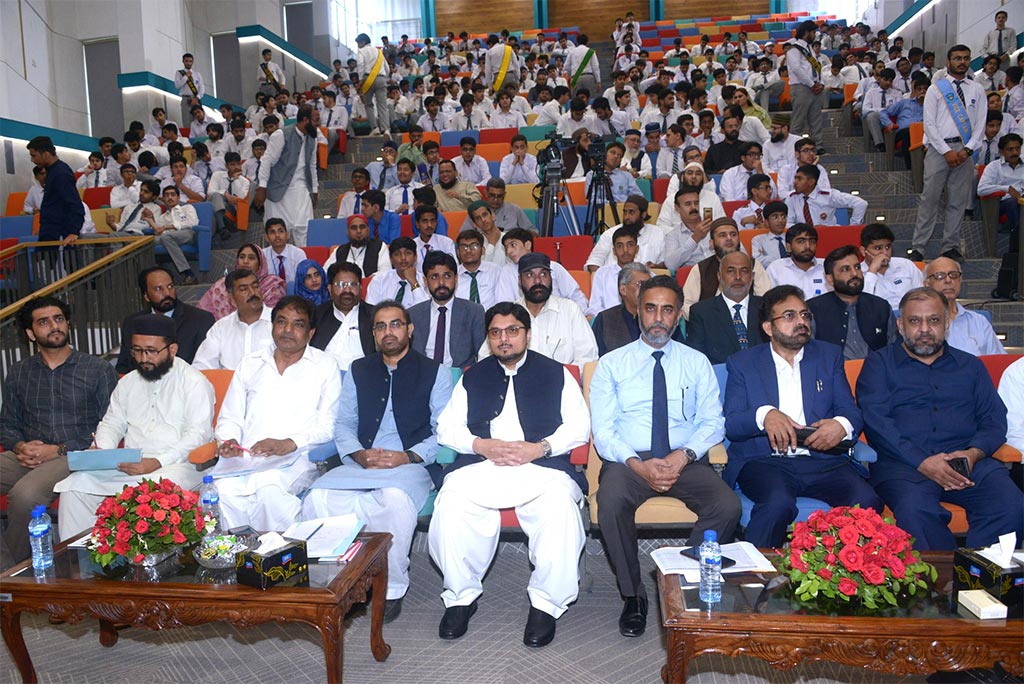
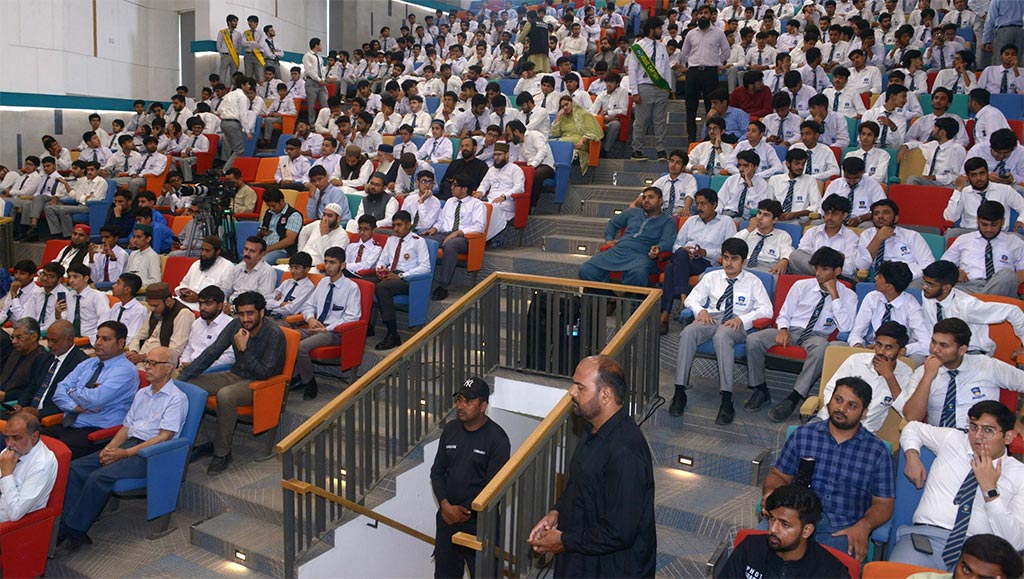
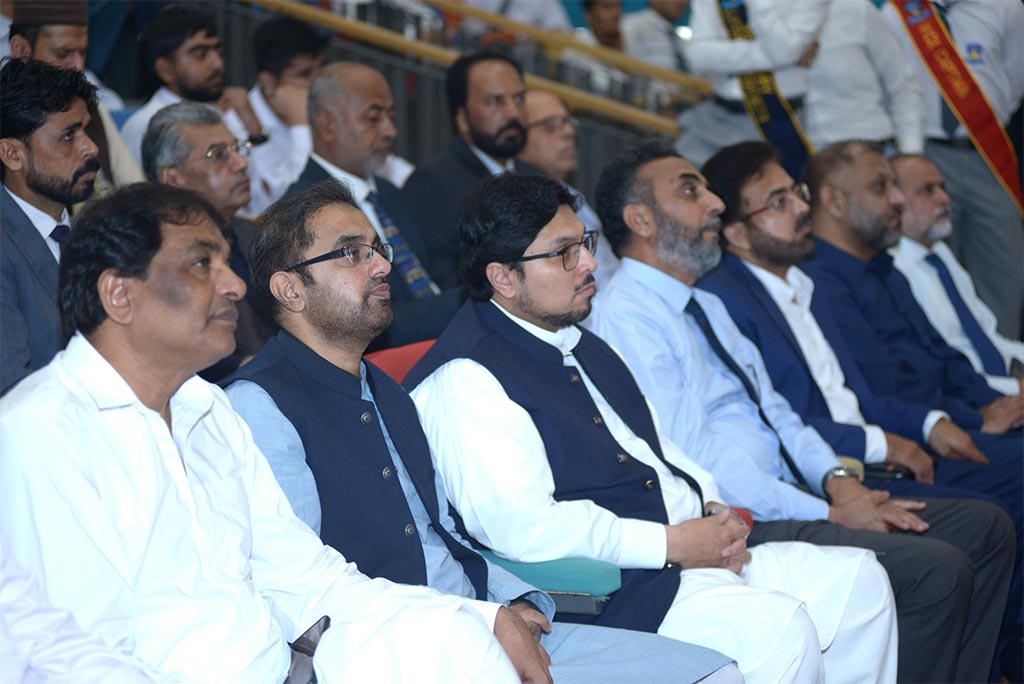
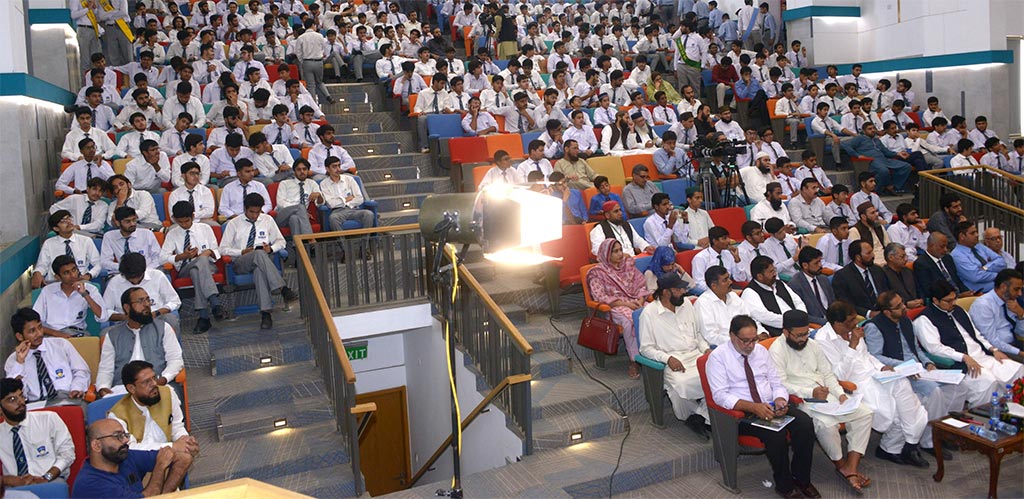
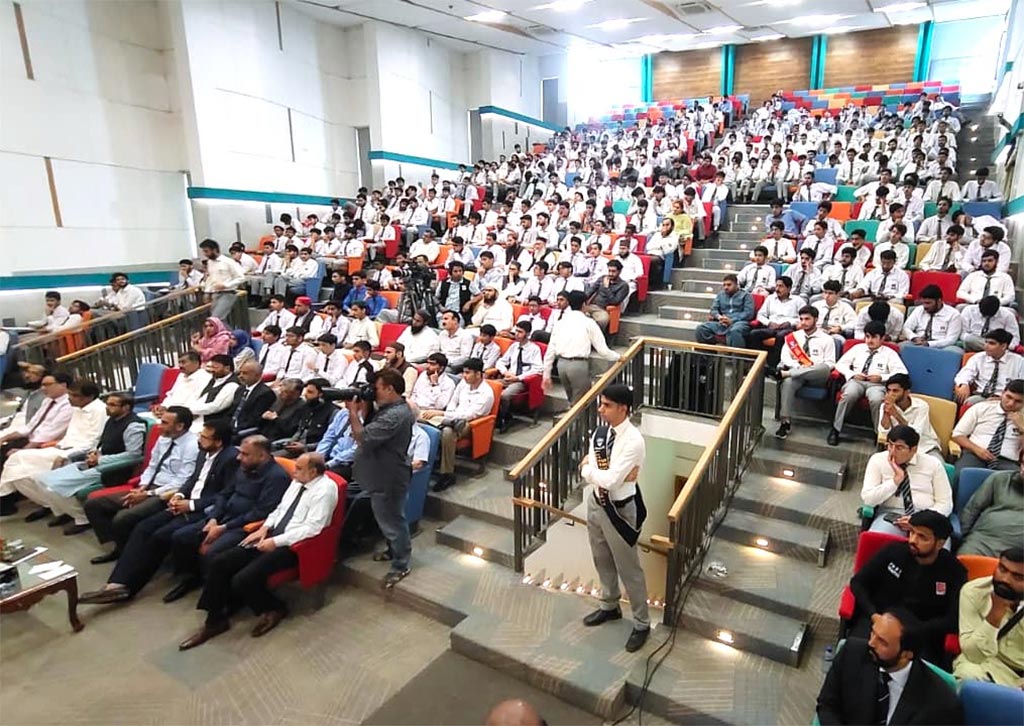
The event was attended by a large number of dignitaries, including Vice-Principal Major (Retd) Ibad-ur-Rehman, Syed Abbas Zidi, Osama Adnan, Professor Rehan Khan Saidi, President of Minhajians Muhammad Shahid Latif, Colonel (Retd) Khalid, Sardar Ilyas Dogar, Malik Imtiaz Hussain Awan, teachers, students, and other esteemed guests.








Comments