
Why Pakistan is Failing the $6 Trillion Halal Market?
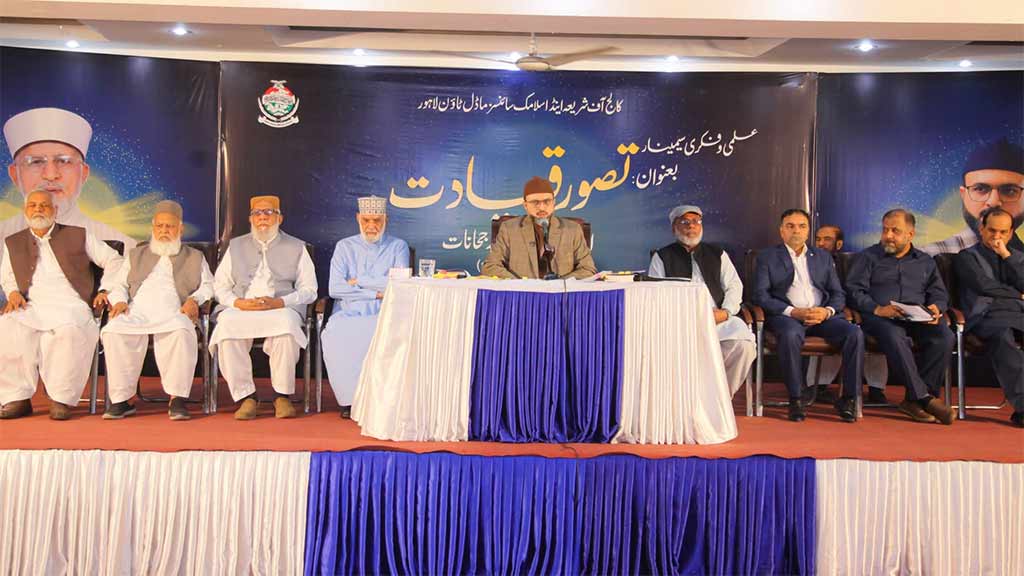
The main hurdle is the PHA act of 2016 which lacks autonomy. The Pakistan Halal authority is technically independent but practically is not. Professor Dr. Hussain Mohi ud Din Qadri
The formal sector is blocked while the informal sector bleeds the country dry. President Minhaj ul Quran
Introduction:
Pakistan is often described as a “sleeping giant” in the global economy, possessing the world’s second-largest Muslim population and the fifth-largest livestock herd on the planet. With over 100 million cattle and buffaloes, along with 117 million sheep and goats, the country has all the natural ingredients to lead the $6 trillion global halal market. However, despite these massive resources and a strategic location connecting Central Asia to the Middle East, Pakistan's performance remains underwhelming. While non-Muslim countries like Brazil earn over $6 billion annually from halal meat exports by investing in standards, Pakistan managed only $512 million in 2024. This blog explores why Pakistan is lagging and what structural changes are needed to reclaim its rightful place in the international market.
The Crisis of Governance and Vision:
A primary reason for Pakistan's failure in the halal sector is political and structural instability. Although the Pakistan Halal Authority (PHA) Act was passed in 2016, the authority has seen more than eight different ministers in less than a decade, each bringing a different priority and vision. This constant change has prevented the building of any lasting infrastructure or long-term strategy for the sector. Consequently, the industry suffers from a structural collapse, not because the idea of a halal authority was flawed, but because the execution has been hindered by political instability and a lack of clear national will.
Outdated Infrastructure and Health Challenges:
Pakistan’s meat industry is currently operating with tools and methods from a bygone era. Many slaughterhouses still utilize techniques from the 1950s, and the infrastructure for export-grade cold storage is almost nonexistent. Furthermore, the prevalence of Foot and Mouth Disease (FMD) remains a significant barrier, effectively barring Pakistani beef from lucrative markets in the Gulf, Europe, and East Asia. Without a national traceability system for livestock and a unified halal standard, small businesses find it nearly impossible to navigate the complex and costly certification processes.
Bureaucratic Warfare and Multi-Ministry Overlap:
The regulation of halal products in Pakistan is currently a victim of “bureaucratic warfare”. At least four separate ministries, Science and Technology, Commerce, Agriculture, and Religious Affairs each claim a stake in halal regulation, often with contradictory rules and competing budgets. An exporter must navigate a maze of multiple approvals, which serves as a massive hurdle rather than a regulatory framework. This lack of coordination ensures that instead of facilitating trade, the government’s own bureaucracy becomes an obstacle to the country’s exports.
The Need for Autonomy: Comparing PHA to Malaysia’s JAKAM:
For Pakistan to succeed, the Pakistan Halal Authority must transition from being technically independent to practically autonomous. Currently, PHA’s leadership changes with every government, and its budget is tightly controlled by the Ministry of Science and Technology. In contrast, Malaysia’s JAKAM operates with full statutory independence and international recognition from over 80 countries. While the JAKAM logo is a globally accepted mark of quality, the PHA logo has yet to gain recognition in most target markets because the authority lacks the power to set standards without ministerial interference.
Legal Gaps and Future Technologies:
Pakistan’s legal framework for food safety is severely outdated, with the core Pure Food Ordinance dating back to 1960, an era before computers, let alone blockchain or AI-based testing. The current laws lack the vocabulary to describe modern export requirements or digital certifications. Furthermore, there is a total absence of policy regarding emerging halal technologies, such as lab-grown meat, biotechnology products, and halal cosmetics. As the world moves forward with new-generation ingredients, Pakistan remains stuck without even a framework for conversation on these advancements.
Conclusion:
Pakistan’s failure to capture a significant share of the $6 trillion halal market is a result of inconsistent policies, bureaucratic red tape, and a refusal to modernize. While the formal sector is often blocked by sudden export bans, an informal and illegal trade of live animals continues to bleed the country dry, raising domestic prices and earning zero export revenue. To transform from a “sleeping giant” into a global leader, Pakistan must empower the PHA with true independence, harmonize its ministries, and update its 60-year-old food laws to meet the technological demands of the 21st century.
Dr. Muhammad Iqbal Chishti (Research Scholar)









Comments