
Tazkiyah: The Path to Spiritual Purity and Success
The one who purifies their heart, cleanses their heart has succeeded, and the one who corrupts their heart by way of practicing disobedience, they have lost out in this world. Shaykh Hammad Mustafa Al-madani Al-qadri
Just as the physical heart as a biological organ is a source of life, spiritually speaking, the heart is also a source of spiritual life. Shaykh Hammad Mustafa Al-qadri
Introduction:
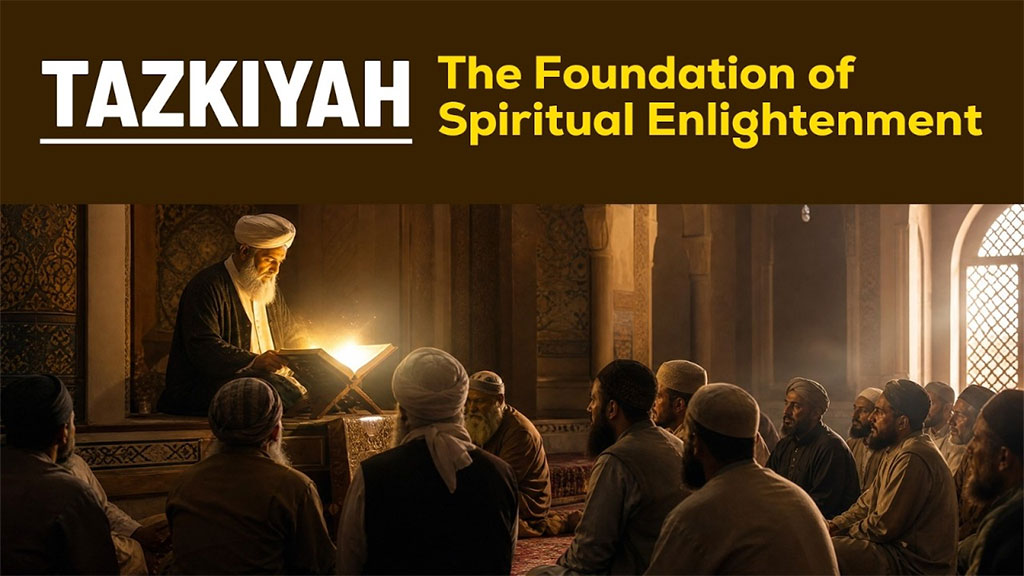
In the journey of faith, the concept of Tazkiyah (purification of the soul) stands as the most critical element for a believer's success. As highlighted by Shaykh Hammad Mustafa al-Madani al-Qadri, Tazkiyah is not just a secondary practice but the very foundation of spiritual enlightenment and success in both this world and the hereafter. It is the process of cleansing the heart from spiritual diseases and aligning one's inner self with Divine pleasure.
The Principle of Success and Loss:
The Quran establishes a clear criterion for success: the one who purifies their heart succeeds, while the one who allows it to be corrupted through disobedience and vice loses out. True success is found in encouraging the heart toward righteous and pious practices, which leads to spiritual prosperity in both worlds. Conversely, neglecting the heart and pursuing vice results in a profound loss of one's spiritual potential.
The Heart as the Spiritual Engine:
A central theme in Islamic teachings is that the heart is the “king” of the body. The Holy Prophet ﷺ said:
أَلَا وَإِنَّ فِي الْجَسَدِ مُضْغَةً إِذَا صَلَحَتْ صَلَحَ الْجَسَدُ كُلُّهُ وَإِذَا فَسَدَتْ فَسَدَ الْجَسَدُ كُلُّهُ أَلَا وَهِيَ الْقَلْبُ.
“Beware! There is a piece of flesh in the body if it becomes good (reformed) the whole body becomes good but if it gets spoilt the whole body gets spoilt and that is the heart.”
(Bukhari, Al-sahih, Vol: 1, P: 28, Hadith# 52)
(Muslim, Al-sahih, Vol: 3, P: 1219, Hadith#1599)
Shaykh Hammad explains that there is an organ in the body which, if it is virtuous and sound, makes the entire body sound. However, if this organ is corrupt, the entire body becomes corrupt. Just as the physical heart is the biological source of life, the spiritual heart serves as the source of spiritual life; its rectification ensures the purity of one's entire existence.
The Divine Mission of the Prophet (ﷺ):
Tazkiyah is deeply rooted in the Quran and the mission of the Holy Prophet (peace be upon him). In Surah Al-Jumu'ah, Allah describes the purpose of the Prophet’s mission:
هُوَ الَّذِي بَعَثَ فِي الْأُمِّيِّينَ رَسُولًا مِنْهُمْ يَتْلُو عَلَيْهِمْ آيَاتِهِ وَيُزَكِّيهِمْ وَيُعَلِّمُهُمُ الْكِتَابَ وَالْحِكْمَةَ وَإِنْ كَانُوا مِنْ قَبْلُ لَفِي ضَلَالٍ مُبِين[الجمعة : 2]
“He is the One Who sent a (Glorious) Messenger (ﷺ) amongst the illiterate people from amongst themselves who recites to them His Revelations and cleanses and purifies them (outwardly and inwardly) and teaches them the Book and wisdom. Indeed, they were in open error before (his most welcome arrival)”
Shaykh Hammad Mustafa Al-madani Al-qadri explains that the Holy Quran is emphasizes the process of Tazkiyah.
Tasawwuf and Scriptural Integrity:
The teachings of Tazkiyah and the practices of the Sufia are often challenged, but these allegations are baseless when viewed through the lens of the Quran and Sunnah. The term Tazkiyah is used synonymously with spiritual cleaning, purification, and enlightenment. It is a fundamental principle clearly mentioned throughout Islamic narrations and the Quran, proving that the pursuit of a pure heart is the very essence of the Prophetic way.
Conclusion:
Ultimately, the rectification of our lives begins with the rectification of our hearts. Tazkiyah is the mechanism through which we cultivate spiritual life and enlightenment. By focusing on the internal cleansing of the soul, just as the Holy Prophet (peace be upon him) focused on his companions, we can transform our entire being, ensuring that our actions and intentions remain sound and pleasing to Almighty Allah.
Dr. Muhammad Iqbal Chishti (Research Scholar)







Comments